China Civil Documents · Updated May 2026
China Single Status / Unmarried Notarial Certificate (未婚公证) for U.S. Immigration: Who Needs It and When
Find out whether you need this document at all, then how to get the right one in order.
Quick answer
If you are already married to your U.S. petitioner (a CR-1 or IR-1 case), you usually do not need a single status certificate. You submit your Notarial Marriage Certificate, plus a divorce or death certificate for every prior marriage. A single status certificate (未婚公证) matters mainly when you are marrying inside China or when a consular officer in Guangzhou asks you to prove there is no undissolved prior marriage. When you do need it, a notary office (公证处) issues it as a bilingual booklet, so no separate translation and no apostille are required.
Do you even need a single status certificate?
Start here, because most people who land on this page do not need one. The certificate proves you are free to marry. Once you are already married, the marriage certificate is what proves your relationship is valid. Match your situation to the rule below.
You are already married to your U.S. petitioner (CR-1 / IR-1) and neither of you was married before
No single status certificate. Submit your Notarial Marriage Certificate. Freedom to marry is shown by the marriage having been legally registered.
You or the U.S. petitioner WAS married before (divorce or death)
No single status certificate, but you must document how each prior marriage ended: a Notarial Divorce Certificate (for a Chinese divorce) or the foreign divorce decree, or the prior spouse's death certificate. Guangzhou requires termination proof for every prior marriage, including the U.S. petitioner's.
You are marrying your partner inside mainland China before filing
Yes. The Civil Affairs marriage registration office requires proof that both parties are free to marry. The Chinese national shows a no-marriage-record certificate; the foreign spouse usually shows an Affidavit of Single Status (sworn at the U.S. consulate, about $50) or an equivalent from their own country.
A consular officer in Guangzhou asks you to prove no undissolved prior marriage
Yes, if requested. Obtain the matching notarial certificate: 未婚公证 if you have never married, or 未再婚公证 / 无婚姻登记记录证明 if you are divorced or widowed and have not remarried.
Free tool
Marriage Green Card Cost Calculator
2026 · AOS · full packet
$3,005
See your exact 2026 USCIS filing fees for a marriage green card through Adjustment of Status, with a full line-item breakdown and the costs most guides leave out.
Free — enter your email and it opens right up. Unsubscribe anytime.
We post free tips on preparing your marriage green card. Follow along:
At a glance
| Topic | Details |
|---|---|
| Document name | Single Status Notarial Certificate. Two forms: 未婚公证 (certifying you have never married) and 未再婚公证 or 无婚姻登记记录证明 (certifying you have not married again since a divorce or a spouse's death). |
| Do you even need it? | If you are already married to your U.S. petitioner (a CR-1 or IR-1 case), you usually do NOT need a single status certificate. You need your marriage certificate plus a divorce or death certificate for every prior marriage. The single status certificate matters mainly when you are marrying in China or a U.S. consular officer asks you to prove no undissolved prior marriage. |
| Issuing authority | A notary office (公证处) issues the notarial certificate, based on a no-marriage-record certificate from the Civil Affairs marriage registration office (婚姻登记处) and your household registration (hùkǒu, 户口簿). |
| Format | A stapled bilingual booklet: the notary's statement in Chinese plus a certified English translation, under the notary office's red seal. No separate translation is needed for U.S. immigration. |
| Cost and timing | Notarization is roughly 240 RMB per certificate (about $33 USD) plus about 20 RMB per extra copy, typically issued within a few working days. The underlying Civil Affairs no-record search is low-cost. Verify the current fee at the notary office before paying. |
| Validity | Treated as current for about 6 months from the issue date for marital-status purposes. Order it close to when you will use it, not months ahead. |
| Apostille / legalization | Not required for the U.S. immigrant visa or for a USCIS filing. The bilingual notarial certificate is the operative document. China joined the Hague Apostille Convention (in force November 7, 2023), but that change is for documents used between member countries, not a new U.S. visa requirement. |
| Where it is used | All U.S. immigrant visa interviews for China are at the U.S. Consulate General in Guangzhou. Documents issued in China must be translated and notarized by a local Chinese notary public office. |
Notary format and document rules verified May 2026 against the U.S. Department of State China reciprocity page and the U.S. Consulate General Guangzhou supplement. Verify the current fee at the notary office before paying.
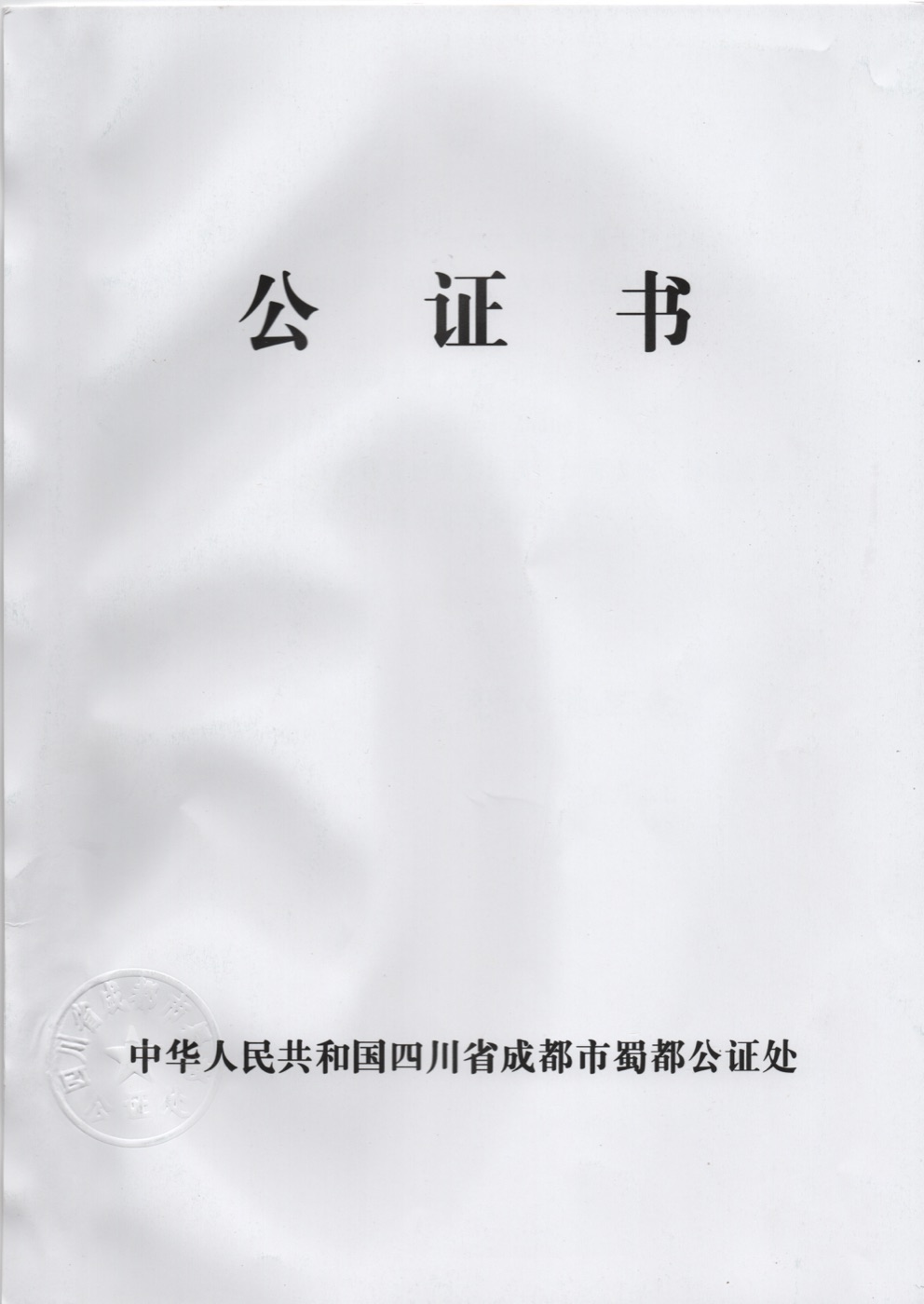
What the certificate is, and the two forms it comes in
China does not hand out a single laminated “single status card.” What you get is a notarial certificate issued by a notary office (公证处), built on a search of the Civil Affairs marriage registry. There are two versions, and the notary office issues whichever one matches your record.
未婚公证 (wèihūn)
Certifies you have never been married. This is the one most people mean when they say “single status certificate.”
未再婚公证 / 无婚姻登记记录证明
Certifies you have not married again since a prior divorce or a spouse’s death. Use this if you are divorced or widowed, not the 未婚 version.
The certificate comes as a stapled bilingual booklet: the notary’s statement in Chinese plus a certified English translation, under the notary office’s red seal. The U.S. Consulate General in Guangzhou notes that documents issued in China must be translated and notarized by a local Chinese notary office, which is exactly what this booklet is. That is why no separate English translation is needed for U.S. immigration.
How to get it, in order
If your situation calls for a single status certificate, follow these steps in order. The notary office cannot issue the certificate without the Civil Affairs result first, so the sequence matters.
Confirm you actually need it
Read the decision rule above first. Most already-married CR-1/IR-1 applicants do not need a single status certificate; they need a marriage certificate plus prior-marriage termination documents. Order a single status certificate only if you are marrying in China or a consular officer asks for proof of no undissolved prior marriage.
Get the no-marriage-record certificate from Civil Affairs
Go to the marriage registration office (婚姻登记处) under the Civil Affairs Bureau where your household is registered. Bring your national ID card and household registration booklet (户口簿). They search the marriage registry and issue a certificate stating you have no marriage record (or, if you are divorced or widowed, no marriage since that event).
Take it to a notary office (公证处) for the notarial certificate
Bring your ID, household booklet, and the Civil Affairs result to a notary office. For a never-married applicant they issue 未婚公证; for a post-divorce or widowed applicant they issue 未再婚公证 or 无婚姻登记记录证明. The notary verifies your documents and your declaration, then issues the bilingual booklet. Budget roughly 240 RMB and a few working days. A relative can apply on your behalf with a written, signed authorization.
Confirm the booklet is bilingual before you leave
The notarial booklet should include both the Chinese statement and a certified English translation under the notary office's red seal. If it does, no separate translation is needed for the National Visa Center upload, the Guangzhou interview, or a USCIS filing. Check the English page is attached before you pay.
Use it within about 6 months
Marital-status notarial certificates are treated as current for roughly 6 months. Order yours close to your NVC submission or interview date rather than far in advance, so it is not stale when the consulate reviews it.
If you were married before: what Guangzhou requires instead
A previously married applicant does not submit a 未婚 certificate. Once you are married to your petitioner you submit the notarial marriage certificate, and you prove that every earlier marriage legally ended. The single most common cause of a stalled China case is a missing prior-marriage termination document, and applicants are often surprised that the U.S. petitioner’s prior divorces count too.
What to gather for every prior marriage
- •Notarial Marriage Certificate for your current marriage (the 未婚 certificate is replaced by this once you are married).
- •Notarial Divorce Certificate for any prior Chinese divorce of either spouse, or the foreign court divorce decree if the divorce happened outside China.
- •Death certificate (notarized) for any prior spouse who has died.
- •Termination proof for the U.S. petitioner's prior marriages too, not only the Chinese applicant's. Guangzhou requires evidence that every prior marriage of both spouses ended.
The Guangzhou post supplement states that applicants must provide marriage termination certificates showing the end of any previous marriage (death certificate of a spouse, or a final divorce or annulment decree), and that if the petitioning spouse was previously married, the applicant must provide evidence the petitioner’s every prior marriage ended.
Do you need an apostille or legalization?
For U.S. immigration
Not required. The bilingual notarial certificate is the operative document at the National Visa Center upload, the Guangzhou interview, and any USCIS filing. Do not pay for an apostille unless a specific U.S. agency asks for it in writing.
The November 2023 apostille change
China joined the Hague Apostille Convention, in force November 7, 2023, replacing consular legalization for public documents used between member countries. This simplifies using Chinese documents abroad; it does not add a U.S. visa requirement.
If you ever need the certificate for the Chinese side of a marriage registration (rather than for U.S. immigration), the apostille or Ministry of Foreign Affairs route can come into play, and a single status notarization is generally treated as current for about 6 months. For the U.S. immigrant visa itself, the notarial booklet alone is what the consulate reviews. If a foreign document needs an English version for a U.S. filing, see our guide to a certified English translation.
What applicants report
Aggregated from VisaJourney China IR-1/CR-1 and Guangzhou consulate threads (2019–2025) and r/immigration China document posts. Real applicant reports, not legal advice; your office and case may differ.
Tips from the community
Already married? Bring termination proof, not a single status certificate
The recurring confusion is that an already-married CR-1/IR-1 applicant goes looking for a 未婚 certificate. Once you are married you submit the notarial marriage certificate instead. What Guangzhou actually wants from a previously married applicant is a divorce or death certificate for each prior marriage, including the U.S. petitioner's.
Source: VisaJourney IR-1/CR-1 China threads, 2019–2025
A missing notarial unmarried certificate has caused a Guangzhou denial
Community members describe a case where an applicant was refused in Guangzhou because they did not present a notarial unmarried certificate when the officer asked for proof of single status. If the consulate requests it, treat it as required and get the matching notarial certificate before you go back.
Source: VisaJourney US Embassy and Consulate discussion, China unmarried-certificate thread
The notary booklet is already bilingual, so do not pay twice for translation
Applicants report ordering a separate certified translation they did not need. The notarial certificate from a Chinese notary office comes as a bilingual booklet with a certified English translation under the red seal, which the consulate and the National Visa Center accept as is.
Source: VisaJourney and r/immigration China document threads, 2020–2025
Match the certificate type to your history
Order 未婚公证 only if you have genuinely never married. If you are divorced or widowed, the correct document is 未再婚公证 or 无婚姻登记记录证明 (no marriage since the prior one ended). Requesting the wrong type sends you back to the notary office.
Source: Notary-office guidance aggregated from community reports, 2023–2025
In their words
“She was refused in Guangzhou because she didn't bring the notarized unmarried certificate. We had no idea they would ask for it.”
“The notary gives you a little booklet with the Chinese on one side and the English translation stapled in. You don't need to translate it again.”
Sources
- U.S. Department of State: China Reciprocity and Civil Documents (verified May 2026)
- U.S. Department of State: U.S. Consulate General Guangzhou (GUZ) Post Supplement (verified May 2026)
- U.S. Embassy & Consulates in China: Marriage (verified May 2026)
- Hague Conference on Private International Law: Apostille Convention enters into force for China (November 7, 2023)
- Chodorow Law Offices: Getting China Notarial Certificates for Your U.S. Immigration Case
- VisaJourney: The Unmarried Certificate (especially for China) (community data)
Frequently asked questions
Do I need a single status certificate if I am already married to my U.S. citizen spouse?
Usually no. For a CR-1 or IR-1 spouse case where you are already married, you submit your Notarial Marriage Certificate, which shows the marriage was legally registered. A single status certificate (未婚公证) is for proving you are free to marry, which mostly matters when you are marrying inside China or when a consular officer in Guangzhou specifically asks you to prove there is no undissolved prior marriage.
What is the difference between 未婚公证 and 未再婚公证?
未婚公证 (wèihūn) certifies that you have never been married. 未再婚公证 (wèizàihūn), sometimes issued as 无婚姻登记记录证明 (no marriage registration record), certifies that you have not married again since a prior divorce or the death of a spouse. Order the one that matches your actual history; the notary office issues whichever applies based on the Civil Affairs marriage-registry search.
Who issues the single status certificate, and what do I bring?
A notary office (公证处) issues the notarial certificate. First the Civil Affairs marriage registration office (婚姻登记处) where your household is registered confirms you have no marriage record. Then you take that result, your national ID card, and your household registration booklet (户口簿) to a notary office, which issues the bilingual notarial booklet. A relative can apply for you with a written, signed authorization.
Does the single status certificate need a separate English translation?
No. The Chinese notarial certificate is issued as a bilingual booklet that already includes a certified English translation under the notary office's red seal. The U.S. Consulate General in Guangzhou and the National Visa Center accept the notarial booklet as issued. Documents created in China must be translated and notarized by a Chinese notary office, which is exactly what this booklet is.
Does the single status certificate need an apostille?
No, not for the U.S. immigrant visa or a USCIS filing. The bilingual notarial certificate is the operative document. China joined the Hague Apostille Convention, in force November 7, 2023, which simplifies using Chinese public documents in other Convention countries, but the U.S. immigration process does not require an apostille or consular legalization of the notarial certificate. Do not pay for an apostille unless a specific U.S. agency requests it in writing.
How long is the single status certificate valid?
Marital-status notarial certificates are generally treated as current for about 6 months from the issue date. Order yours close to your National Visa Center submission or your Guangzhou interview rather than far ahead, so it is not considered stale when the consulate reviews your file.
I was married before. What do I submit instead of a single status certificate?
Document how each prior marriage ended. For a divorce registered in China, that is a Notarial Divorce Certificate; for a divorce abroad, the foreign court divorce decree; for a deceased prior spouse, a notarized death certificate. The U.S. Consulate General in Guangzhou requires termination proof for every prior marriage of both spouses, including the U.S. petitioner's prior marriages, not only the Chinese applicant's.
Key takeaways
- ✓
Most already-married CR-1/IR-1 applicants do not need a single status certificate. They need a notarial marriage certificate plus a divorce or death certificate for every prior marriage of both spouses.
- ✓
The single status certificate matters mainly when you are marrying inside China or when a consular officer in Guangzhou asks you to prove there is no undissolved prior marriage.
- ✓
There are two forms: 未婚公证 (never married) and 未再婚公证 / 无婚姻登记记录证明 (no marriage since a divorce or a spouse's death). The notary office issues whichever matches your record.
- ✓
It is issued by a notary office (公证处) from a Civil Affairs no-marriage-record check and your household booklet, as a bilingual booklet with a certified English translation, so no separate translation is needed.
- ✓
No apostille or legalization is required for U.S. immigration. China's November 7, 2023 Apostille Convention entry is for documents used between member countries, not a new U.S. visa requirement. Use the certificate within about 6 months of issue.
Gathering Chinese documents for a marriage green card?
Green Card Genius builds your personalized document checklist and fills your USCIS forms based on your answers, including which civil documents the National Visa Center and Guangzhou need and in what order. See if your situation fits.
Check your eligibilityStay informed
Green card guides in your inbox
Practical, plain-English updates to help you navigate the process with confidence.
Unsubscribe anytime.
Continue reading
- 01Chinese Marriage Certificate (结婚公证) for U.S. Immigration: Which Notarial Certificate to Request and Prior-Divorce Documents
- 02China Notarial Certificates (公证书 / Gōngzhèng-shū) for U.S. Immigration: Which Ones You Need and How to Get Them
- 03Common 221(g) Refusals at the U.S. Consulate General Guangzhou
- 04Guangzhou Immigrant Visa Interview Trip: U.S. Consulate Logistics & Medical (2026)
Be a Genius
Only pay when you file