China Civil Documents · Updated May 2026
Chinese Marriage Certificate (结婚公证) for U.S. Immigration: Which Notarial Certificate to Request and Prior-Divorce Documents
Ask the notary office for the right form, handle prior marriages in the same visit, and skip the apostille you do not need.
Summary
Take your red marriage certificate (结婚证, issued by the Civil Affairs Bureau, 民政局) to a Chinese notary public office (公证处) and ask for the Notarial Certificate for Marriage (结婚公证书), the form that recites the marriage facts, not the one that only certifies a photocopy. The office binds the English translation into the booklet, so you usually do not buy a separate translation, and no apostille is required for the U.S. filing. If you or the U.S. petitioner were married before, also get a notarial divorce certificate (离婚公证) for every prior marriage. Upload the whole bilingual booklet to the National Visa Center, not just the English page, and bring the original to the U.S. Consulate General Guangzhou.
At a glance
| Topic | Details |
|---|---|
| What U.S. immigration needs | A notarial certificate (公证书) of your marriage from a Chinese notary public office (公证处), based on the red marriage certificate (结婚证) issued by the Civil Affairs Bureau (民政局). Ask for the one that recites the marriage facts (Notarial Certificate for Marriage / 结婚公证书), not just a true-copy of the booklet. |
| Underlying document | The red marriage certificate booklet (结婚证) issued by the marriage registration office of the local Civil Affairs Bureau (民政局) when you registered the marriage. The notary office builds the notarial certificate from it. |
| Issuing authority | A notary public office (公证处 gōngzhèng-chù) under the PRC Ministry of Justice. The marriage itself is registered by the marriage registration office (婚姻登记处) of the local Civil Affairs Bureau (民政局). |
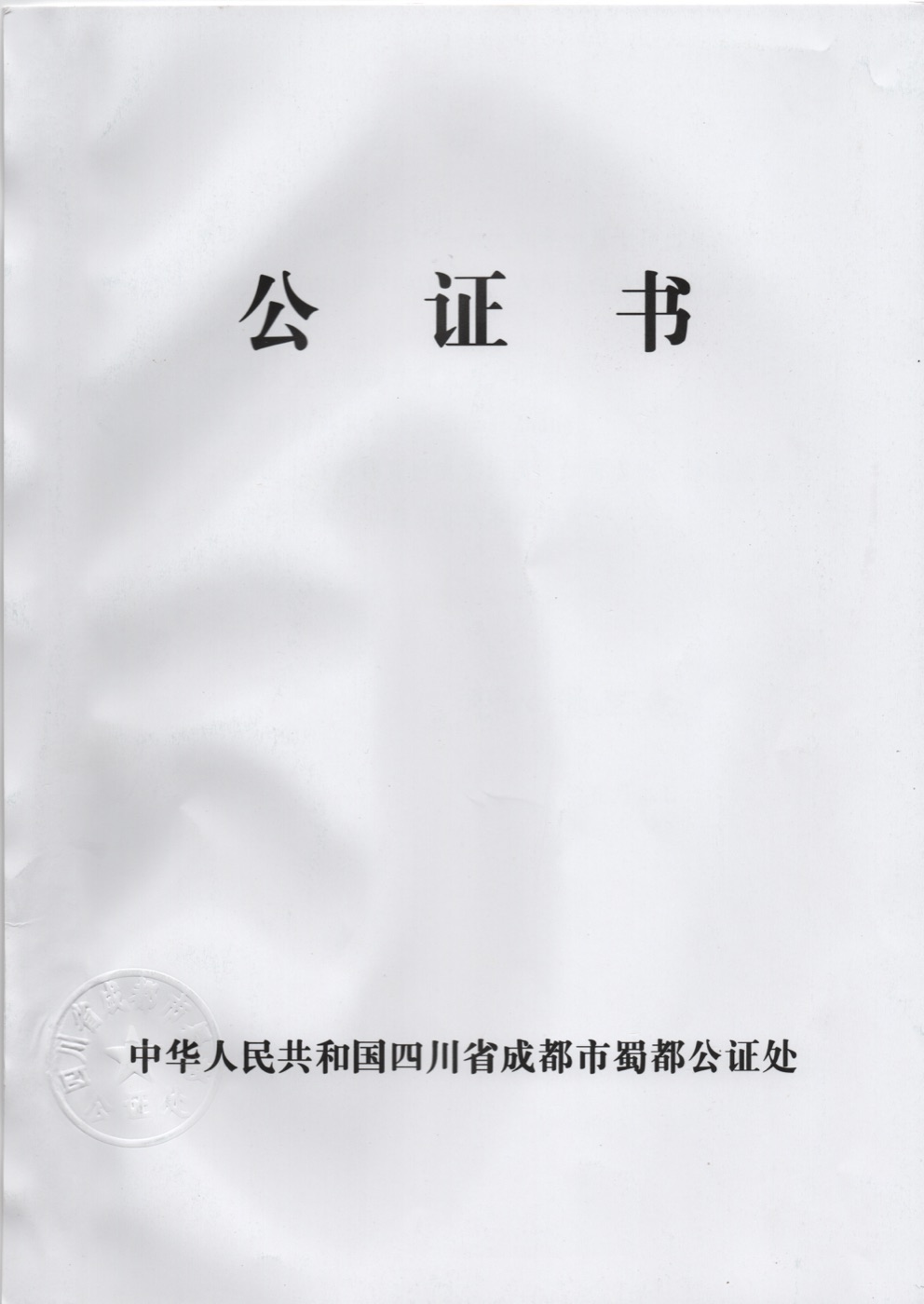
| Appearance | A white A4 booklet titled 公证书 with the notary office name, a red notary-office seal, the notary's signature, and a case number. The Chinese text, the English translation, and a translator's conformity statement are bound inside. |
| Translation | Built into the booklet. Tell the notary office it is for U.S. immigration so it includes the English translation and a statement that the translation conforms to the Chinese original. You usually do not buy a separate certified translation. |
| Prior marriages | If you or the U.S. petitioner were ever married before, you also need a notarial divorce certificate (离婚公证) for every prior marriage, based on the divorce certificate (离婚证), court mediation paper (民事调解书), or divorce judgment (离婚判决书). |
| Apostille / legalization | Not required for the U.S. green-card filing. China joined the Hague Apostille Convention on November 7, 2023, but NVC, USCIS, and the Guangzhou consulate work from the notarial booklet plus its built-in translation. |
| Cost | Roughly RMB 300 to 500 including the translation, per State Department fee ranges. Fees vary by city and document; verify with the notary office before paying. |
Document details and fee ranges verified May 2026 against the U.S. Department of State China reciprocity page. Verify directly before relying on them.
Free tool
Marriage Green Card Cost Calculator
2026 · AOS · full packet
$3,005
See your exact 2026 USCIS filing fees for a marriage green card through Adjustment of Status, with a full line-item breakdown and the costs most guides leave out.
Free — enter your email and it opens right up. Unsubscribe anytime.
We post free tips on preparing your marriage green card. Follow along:
Which of the two marriage notarizations to request
China does not hand you a copy of the marriage record itself. Your marriage is registered in the red marriage certificate booklet (结婚证) by the marriage registration office ( 婚姻登记处) of the local Civil Affairs Bureau (民政局). To use it for a U.S. green card, a notary public office (公证处) builds a notarial certificate (公证书) from that booklet. There are two forms, and applicants routinely ask the notary for the wrong one.
Ask for this: Notarial Certificate for Marriage (结婚公证书)
It recites the marriage facts: who married whom, when, and that the marriage is genuine and legal. This is the form that attests to the marriage itself, which is what NVC and the Guangzhou consulate are looking for.
Not this on its own: Notarial Marriage Certificate (结婚证公证)
This only certifies that a photocopy of the red booklet matches the original. It is a true-copy notarization, not a recital of the marriage. On its own it is the form people order by mistake.
How to get it, in order
Follow this sequence once. Doing it in this order keeps you from notarizing the wrong form, paying for a translation you do not need, and making a second trip for prior-divorce documents.
Step 1: Have the red marriage certificate (结婚证) in hand
You cannot notarize a marriage that was never registered. The notarial certificate is built from the red marriage certificate booklet (结婚证) the Civil Affairs Bureau (民政局) issued when you registered. If you married in China, each spouse received one red booklet. If you cannot find yours, the marriage registration office (婚姻登记处) of the Civil Affairs Bureau that registered the marriage can issue a replacement or a marriage-record certificate first.
Step 2: Decide which prior-marriage documents you also need (do this before you go)
A marriage-based case must show both spouses were free to marry. If you or the U.S. petitioner were married before, you also need proof each prior marriage legally ended: a notarial divorce certificate (离婚公证) for a Chinese divorce, or the U.S. divorce decree for the petitioner's prior marriages. Settle this first so you can notarize the marriage and any divorce certificates in the same visit to the notary office.
Step 3: Take the red booklet to a notary office (公证处) with the right jurisdiction
Go to a notary public office under the Ministry of Justice. Bring your national ID and household registration book (户口簿), the original red marriage certificate (结婚证), and two passport-style photos. A foreign spouse brings their passport. If you apply through a relative in China, bring the signed authorization the notary office requires.
Step 4: Ask for the certificate that recites the marriage, not just a true-copy
There are two forms. The Notarial Certificate for Marriage (结婚公证书) recites the marriage facts (who married whom, when, and that it is genuine and legal). The Notarial Marriage Certificate (结婚证公证) only certifies that a photocopy of the red booklet matches the original. Tell the notary office it is for a U.S. immigrant visa and ask for the certificate that attests to the marriage itself, with the English translation bound in.
Step 5: Submit the whole bilingual booklet to NVC, then bring originals to Guangzhou
Scan and upload the complete notarial booklet (the Chinese pages, the English translation, and the notary cover and seal) to the National Visa Center (NVC), not just the English translation page. Then carry the original booklet to the immigrant visa interview at the U.S. Consulate General Guangzhou. Do not pay for an apostille for this filing unless a specific U.S. agency asks for one in writing.
Prior marriages: the notarial divorce certificate NVC requires
A marriage-based case has to show that both spouses were free to marry. If either of you was married before, the marriage notarial certificate is not enough on its own. The single most common cause of a stalled China case is a missing prior-divorce document, and applicants are often surprised that the U.S. petitioner’s prior divorces count too. Which Chinese divorce document you notarize depends on how the divorce happened.
If: Uncontested divorce registered at the Civil Affairs Bureau
Then: Divorce certificate (离婚证 líhūnzhèng) from the marriage registration office. Notarize it into a notarial divorce certificate (离婚公证).
If: Contested divorce, or any divorce involving a foreign spouse
Then: Court mediation paper (民事调解书 mínshì tiáojiěshū) or divorce judgment (离婚判决书 / 判决书 pànjuéshū) from the court. Notarize that court document into a notarial divorce certificate.
If: The U.S. petitioner's prior marriages
Then: The U.S. (or other country's) divorce decree for each one. These are not Chinese documents and are not notarized in China; provide them directly to NVC.
What to gather for every prior marriage
- •The notarial marriage certificate (结婚公证) for your current marriage, based on the red 结婚证.
- •A notarial divorce certificate (离婚公证) for every prior marriage of the Chinese spouse that ended in divorce, based on the divorce certificate (离婚证) for an uncontested divorce, or the court mediation paper (民事调解书) or divorce judgment (离婚判决书) for a contested or foreign-involved divorce.
- •The U.S. (or other foreign) divorce decree for every prior marriage of the U.S. petitioner, not only the Chinese spouse's.
- •A death certificate for any prior spouse who has died (notarized, in China's case, the same way).
A Chinese divorce notarial certificate (离婚公证) is the same kind of booklet as the marriage one and is issued by the same notary office, so you can notarize the marriage and the prior divorce in one visit. The State Department China reciprocity page lists the divorce certificate (离婚证), court mediation paper (民事调解书), and divorce judgment (离婚判决书) as acceptable underlying documents.
Translation and apostille: what you do and do not need
These two steps cause the most confusion and the most wasted money. For the U.S. green-card filing, one is built into the booklet and the other is skipped entirely.
Translation
Built into the booklet. Tell the notary office it is for U.S. immigration and ask it to include the English translation and a statement that the translation conforms to the Chinese original. State Department guidance requires every Chinese notarial document to carry that English translation, so most China applicants do not buy a separate certified translation.
Apostille / legalization
Not needed for this filing. NVC, USCIS, and the Guangzhou consulate work from the notarial booklet plus its translation. Do not pay for an apostille for your green-card case unless a specific U.S. agency asks for one in writing.
You may have read that China “is now an apostille country.” That is true: China acceded to the Hague Apostille Convention effective November 7, 2023, and Chinese embassies and consulates in the U.S. stopped doing consular legalization that day. But the apostille governs how a Chinese public document is recognized abroad in general. It does not add a step to your U.S. green-card filing, which still works from the notarial certificate and its built-in translation. For how the notarial system fits the whole document set, see the China notarial certificates overview.
What applicants report
Aggregated from the VisaJourney China and IR-1/CR-1 forums and immigration-attorney guidance, 2023–2025. The notarial system draws steady but narrow forum chatter, so we lead with the patterns that repeat. Quotes are paraphrased from named, dated threads. Real applicant reports, not legal advice; your office and case may differ.
Tips from the community
There are two marriage notarizations, and applicants order the wrong one
The recurring China-forum question is which marriage notarization to request. One form recites the marriage facts; the other only certifies a photocopy of the red booklet. Tell the notary office it is for a U.S. immigrant visa and ask for the Notarial Certificate for Marriage (结婚公证书) that attests to the marriage, not just a copy-conformity notarization.
VisaJourney IR-1/CR-1 thread “Two different kinds of Chinese marriage certificate notarization?”, 2023–2024
Red book vs white book confusion: the notarial booklet is what NVC uses
Applicants ask whether to upload the small red marriage booklet (结婚证) or the white notarial booklet (公证书). The red 结婚证 is the underlying Chinese record; the white notarial certificate built from it, with the English translation inside, is what NVC and Guangzhou work from. Upload the notarial booklet.
VisaJourney IR-1/CR-1 thread “Chinese Marriage Certificate Red book or White book?”, 2023–2024
Upload the whole booklet to NVC, not just the English translation page
A common NVC document-upload rejection comes from submitting only the English translation page. Scan the complete notarial booklet: the notary cover and seal, the Chinese pages, the English translation, and the translator's conformity statement, as one file. Members report fixing upload rejections by re-uploading the full booklet rather than a cropped translation.
VisaJourney IR-1/CR-1 “NVC civil documents uploading problem” threads, 2023–2024
Do not over-order the provincial authentication stamp
Some notaries ask whether the U.S. needs an extra provincial Foreign Affairs Office authentication or apostille on top of the notarization. For the U.S. green-card filing it does not. The notarial booklet plus its built-in translation is what NVC and the consulate use; the apostille governs cross-border recognition in general, not this filing.
VisaJourney China and IR-1/CR-1 forums, 2023–2025
In their words
“There seem to be two different kinds of marriage certificate notarization in China and I can't tell which one the NVC actually wants.”
“Do I upload the little red marriage book or the white notarized one for the NVC civil documents?”
Sources
- U.S. Department of State: China Reciprocity and Civil Documents (Marriage and Divorce sections) (verified May 2026)
- U.S. Consulate General Guangzhou: Immigrant Visa Post Supplement (verified May 2026)
- Chodorow Law Offices: Getting China Notarial Certificates for Your U.S. Immigration Case (marriage and divorce forms) (verified May 2026)
- China Briefing: China Joins the Apostille Convention (effective November 7, 2023) (verified May 2026)
- VisaJourney IR-1/CR-1 threads: “Two different kinds of Chinese marriage certificate notarization?”, “Chinese Marriage Certificate Red book or White book?”, and “NVC civil documents uploading problem” (community), 2023–2024
Frequently asked questions
What is the Chinese marriage certificate for U.S. immigration, and what does it look like?
It is a notarial certificate (公证书) of your marriage from a Chinese notary public office (公证处), built from the red marriage certificate booklet (结婚证) the Civil Affairs Bureau (民政局) issued when you registered. The notarial certificate is a white A4 booklet titled 公证书 with a red notary-office seal, and it binds the Chinese text, an English translation, and a translator's conformity statement together. That bilingual booklet, not the small red 结婚证 by itself, is what the National Visa Center and the U.S. Consulate General Guangzhou work from.
Which of the two marriage notarizations should I ask for?
Ask for the Notarial Certificate for Marriage (结婚公证书), which recites the marriage facts and certifies the marriage is genuine and legal. The other form, the Notarial Marriage Certificate (结婚证公证), only certifies that a photocopy matches the original red booklet. Tell the notary office it is for a U.S. immigrant visa so you get the certificate that attests to the marriage itself, with the English translation bound in.
Do I need a separate English translation?
Usually no. State Department guidance requires every Chinese notarial document to carry an English translation with a statement that the translation conforms to the Chinese original, and the notary office binds that into the booklet. Tell the office it is for U.S. immigration and confirm the English translation and conformity statement are present before you leave, so you do not have to buy a separate certified translation.
We were married before. What divorce documents do we need?
You need a notarial divorce certificate (离婚公证) for every prior marriage of the Chinese spouse that ended in divorce. For an uncontested divorce that is based on the divorce certificate (离婚证) from the marriage registration office; for a contested divorce or one involving a foreign spouse it is based on the court mediation paper (民事调解书) or divorce judgment (离婚判决书). For the U.S. petitioner's prior marriages, provide the U.S. divorce decree for each one directly to NVC. The petitioner's prior divorces count, not only the Chinese spouse's.
Does the Chinese marriage certificate need an apostille for U.S. immigration?
No. China joined the Hague Apostille Convention effective November 7, 2023, and Chinese embassies and consulates in the U.S. stopped doing consular legalization that day. But the apostille governs how a Chinese public document is recognized abroad in general; it is not what the U.S. green-card filing uses. NVC, USCIS, and the Guangzhou consulate accept the bilingual notarial certificate plus its built-in translation. Do not pay for an apostille for this filing unless a specific U.S. agency requests one in writing.
What does the marriage notarial certificate cost and where do I get it?
State Department fee ranges put it at roughly RMB 300 to 500 including the translation, though fees vary by city and document. Get it at a notary public office (公证处) under the Ministry of Justice, normally one with jurisdiction over where your household registration (户口) is. The marriage itself is registered separately at the marriage registration office (婚姻登记处) of the local Civil Affairs Bureau (民政局). Verify the current fee with the notary office before paying.
Can I get the marriage notarization done from the United States?
You typically authorize a relative in China to apply on your behalf. The notary office will want a signed authorization or power of attorney along with the red marriage certificate (结婚证) and identity documents. The Chinese spouse who is in China can also obtain it directly. Either way the notarial booklet, not a copy of the red 结婚证 alone, is uploaded to NVC and carried to the Guangzhou interview.
Key takeaways
- ✓
For a U.S. green card you need a notarial certificate (公证书) of your marriage from a Chinese notary office (公证处), built from the red marriage certificate (结婚证) the Civil Affairs Bureau (民政局) issued. The notarial booklet, not the red 结婚证 alone, is what NVC and Guangzhou use.
- ✓
Ask for the Notarial Certificate for Marriage (结婚公证书) that recites the marriage facts, not the Notarial Marriage Certificate (结婚证公证) that only certifies a photocopy. Applicants routinely order the wrong one.
- ✓
The English translation is bound into the notarial booklet, so most China applicants do not buy a separate certified translation. Confirm it is present before leaving the office.
- ✓
If you or the U.S. petitioner were married before, add a notarial divorce certificate (离婚公证) for each Chinese divorce, based on the divorce certificate (离婚证) for an uncontested divorce or the court mediation paper (民事调解书) or judgment (离婚判决书) for a contested one. The petitioner's U.S. divorce decrees count too.
- ✓
Upload the whole bilingual booklet to NVC, not just the English translation page. A cropped translation is a common upload rejection.
- ✓
No apostille is needed for the green-card filing. China joined the Apostille Convention on November 7, 2023, but the Guangzhou consulate works from the notarial booklet plus its translation. All mainland-China immigrant visa interviews happen at the U.S. Consulate General Guangzhou.
Collecting documents for consular processing?
Green Card Genius guides you through every step of the consular processing path, including which civil documents the National Visa Center requires and in what order. See if it fits your situation.
See how it worksStay informed
Green card guides in your inbox
Practical, plain-English updates to help you navigate the process with confidence.
Unsubscribe anytime.
Continue reading
- 01China Notarial Certificates (公证书 / Gōngzhèng-shū) for U.S. Immigration: Which Ones You Need and How to Get Them
- 02China Single Status / Unmarried Notarial Certificate (未婚公证) for U.S. Immigration
- 03China Notarial Birth Certificate (出生公证) for U.S. Immigration: How to Get It
- 04How to Prove Your Marriage is Real to USCIS (2026 Evidence Guide)
Be a Genius
Only pay when you file