Ghana Civil Documents · Updated May 2026
Ghanaian Marriage Certificate for U.S. Immigration: Ordinance, Customary, and Islamic Marriage
Get the registered certificate the U.S. Embassy in Accra accepts, register a customary or Islamic marriage the right way, and handle prior divorces before they stall your case.
Summary
U.S. immigration wants a registered civil marriage certificate that names the marriage type. Ghana recognizes three types: ordinance (civil) marriage under the Marriages Act (CAP 127), which produces a Marriage Certificate from a Marriage Registry; customary marriage, which you register at your Metropolitan, Municipal, or District Assembly using a statutory declaration; and Islamic (Mohammedan) marriage, registered with the Registrar of Mohammedan Marriages. If your customary or Islamic marriage was never registered, register it first so a certificate exists. If you or the U.S. petitioner were married before, you also need a court divorce decree for each prior marriage, even a customary one. No translation (documents are in English) and no apostille are required.
At a glance
| Topic | Details |
|---|---|
| What U.S. immigration accepts | A civil marriage certificate that names the marriage type in the 'condition' field. The State Department says immigrant visa applicants must submit a civil marriage certificate reflecting whether the marriage was ordinance, customary, or Islamic. So the document the consulate wants is the registered certificate, not the traditional rites alone. If you married only under customary or Islamic law and never registered it, register it first (see the steps below). |
| Three marriage types | Ordinance (civil) marriage under the Marriages Act (CAP 127) produces a Marriage Certificate from a Marriage Registry. Customary marriage is registered at the Metropolitan, Municipal, or District Assembly using a statutory declaration, which records it in the Customary Marriage Register. Islamic (Mohammedan) marriage under CAP 129 is registered with the Registrar of Mohammedan Marriages, signed by the groom, the bride's Wali, the priest, and two witnesses. |
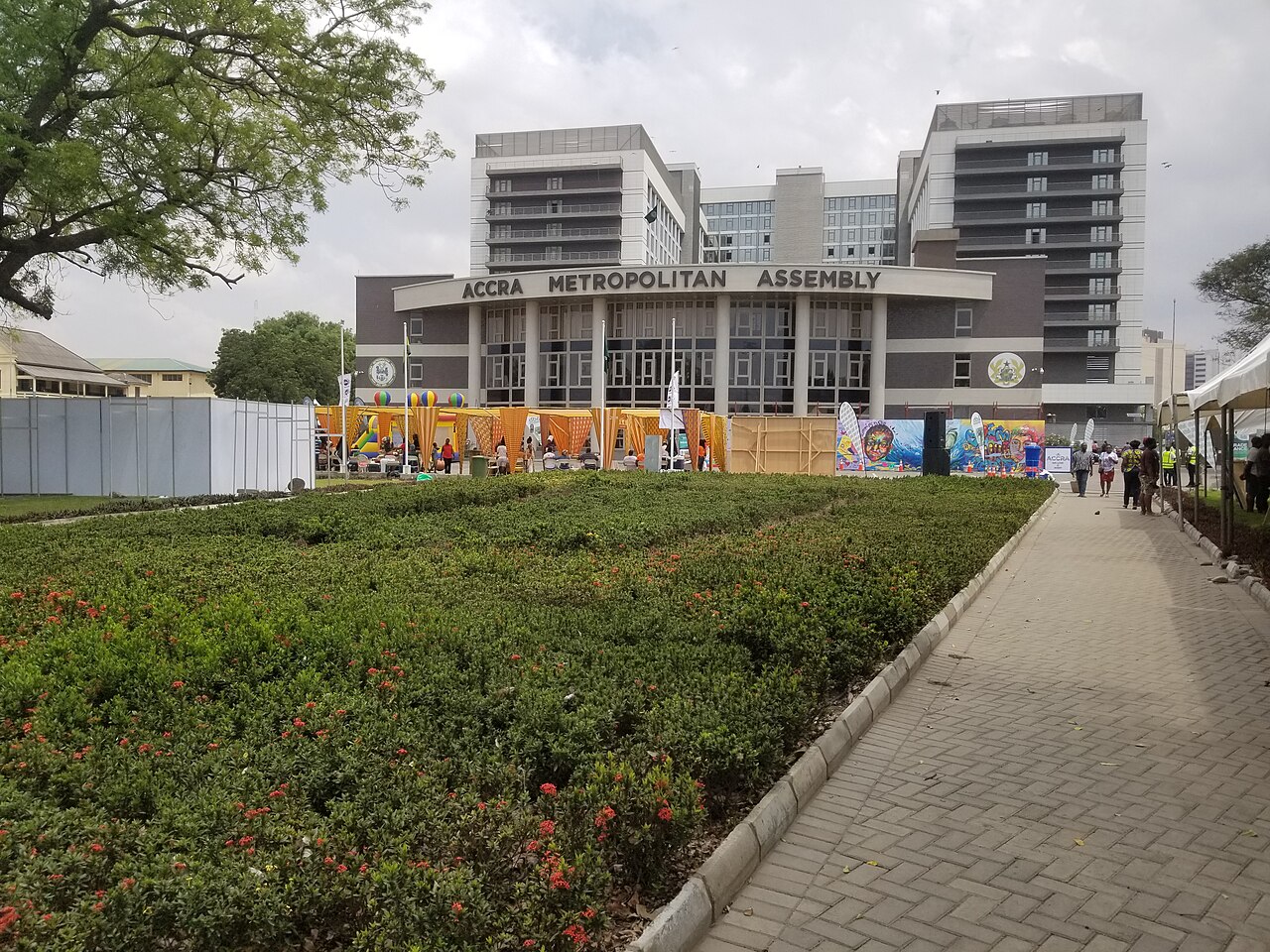
| Issuing authority | Ordinance and customary: the Marriage Registry at the Metropolitan, Municipal, or District Assembly (in Accra, the Accra Metropolitan Assembly), overseen by the Registrar General's Department. Islamic: the Registrar of Mohammedan Marriages. |
| Cost (official) | At the Accra Metropolitan Assembly, an ordinance Notice of Marriage filing is GH¢102 and certificate issuance is GH¢210, with a Certified True Copy at GH¢108. The State Department lists civil marriage at GHC 200 to 400 and customary at GHC 60 to 100, varying by office; Islamic registration carries no fee. Fees as of May 2026; confirm with the specific Assembly before paying. |
| Prior marriages | If you or the U.S. petitioner were married before, you also need proof every earlier marriage ended. Ghana dissolves all three marriage types by court decree under the Matrimonial Causes Act 1971: a Divorce Certificate or Decree of Dissolution from the High Court, Circuit Court, or District Court that granted it. For a customary divorce you also need a family statutory declaration, but the court decree is still required. |
| Translation | Not required. English is Ghana's official language and civil documents are issued in English, so no certified translation is needed for the National Visa Center (NVC) or USCIS. |
| Legalization / apostille | Not required for the U.S. immigrant visa. Ghana is not a party to the Hague Apostille Convention. Present the original certified certificate at the Accra interview. Do not pay a legalization service unless a specific U.S. agency asks for it in writing. |
Marriage types, divorce rules, and document guidance verified May 2026 against the U.S. Department of State Ghana reciprocity page. Fees are from the Accra Metropolitan Assembly schedule; verify before paying.
Free tool
Marriage Green Card Cost Calculator
2026 · AOS · full packet
$3,005
See your exact 2026 USCIS filing fees for a marriage green card through Adjustment of Status, with a full line-item breakdown and the costs most guides leave out.
Free — enter your email and it opens right up. Unsubscribe anytime.
We post free tips on preparing your marriage green card. Follow along:
Which document you need: a decision rule
Ghana recognizes three kinds of marriage, and each one is registered by a different authority and produces a different record. The State Department says the immigrant visa needs a civil marriage certificate that reflects the marriage type in its “condition” field, so the goal is a registered, certified certificate, not the wedding rites alone. Find your situation below and follow the matching rule.
If: You had an ordinance (civil) marriage
Then: Use the Marriage Certificate issued by the Marriage Registry under the Marriages Act (CAP 127). This is the cleanest document for a U.S. case. If you only have a photocopy or lost the original, order a Certified True Copy from the Assembly that married you (GH¢108 at the Accra Metropolitan Assembly as of May 2026).
If: You had a customary (traditional) marriage and it is already registered
Then: Use the registration certificate from the Customary Marriage Register at your Metropolitan, Municipal, or District Assembly. Make sure the certificate names the marriage type as customary, because the consulate expects the civil certificate to reflect which type of marriage it records.
If: You had a customary marriage but never registered it
Then: Register it now. Take a statutory declaration of the customary marriage (names, residences, the date and place of the rites, signed by parents or family representatives) to the Marriage Registry at your District Assembly. The Assembly posts a notice (28 days at the Accra Metropolitan Assembly) and then records the marriage in the Customary Marriage Register and issues the certificate.
If: You had an Islamic (Mohammedan) marriage
Then: Register it with the Registrar of Mohammedan Marriages under CAP 129, ideally within one week of the ceremony, signed by the groom, the bride's Wali, the priest, and two witnesses. If registration was missed or is hard to obtain where you are, many couples do an ordinance (civil) marriage and use that certificate, because it is the document the consulate recognizes most readily.
How to get the right document, in order
Work through these steps from the top. They fold in registering an unregistered marriage and the prior-divorce documents, so neither one surprises you late in the process.
Step 1: Identify which marriage you had, then get the registered certificate for it
Ghana has three legal marriage types. Ordinance (civil) marriage under the Marriages Act (CAP 127) produces a Marriage Certificate from a Marriage Registry. Customary marriage is registered at your Metropolitan, Municipal, or District Assembly. Islamic (Mohammedan) marriage is registered with the Registrar of Mohammedan Marriages. The State Department says the immigrant visa needs a civil marriage certificate that names the marriage type, so the goal of this step is a registered, certified certificate, not the wedding rites alone.
Step 2: If your customary or Islamic marriage was never registered, register it first
For a customary marriage, prepare a statutory declaration describing the rites (names, residences, date and place, signed by parents or family representatives) and file it at the Marriage Registry at your District Assembly. The Assembly posts a notice (28 days at the Accra Metropolitan Assembly), then records the marriage in the Customary Marriage Register. For an Islamic marriage, register with the Registrar of Mohammedan Marriages, signed by the groom, the bride's Wali, the priest, and two witnesses. Registration is what produces the certificate the consulate can read.
Step 3: For an ordinance marriage, get the certificate or a Certified True Copy
An ordinance marriage starts with a Notice of Marriage at the district Marriage Registry, posted for 21 days; if no objection is raised the registrar issues a Certificate of Notice valid for three months, and the ceremony follows at a licensed location. At the Accra Metropolitan Assembly the Notice filing is GH¢102 and certificate issuance is GH¢210. If you already married and lost the original, request a Certified True Copy (GH¢108 at the Accra Metropolitan Assembly).
Step 4: Pull the divorce or death documents if either spouse was married before
Gather proof every earlier marriage ended for both spouses, including the U.S. petitioner. Ghana dissolves all marriage types, including customary and Islamic, by court decree under the Matrimonial Causes Act 1971. The document is a Divorce Certificate or Decree of Dissolution from the High Court, Circuit Court, or District Court that granted it. For a customary divorce you also bring a family statutory declaration, but the court decree is still required. For a deceased prior spouse, bring the death certificate.
Step 5: Bring originals to the U.S. Embassy Accra interview, plus relationship evidence
Carry your original certified marriage certificate and your original divorce or death documents to the immigrant visa interview at the U.S. Embassy in Accra. Schedule your panel-physician medical exam after NVC sends your interview date. The certificate alone does not carry a marriage case at Accra, where bona-fides scrutiny is high, so build a strong relationship-evidence file (photos, chats, money transfers, call logs, travel) to go with it.
Prior marriages: the divorce documents NVC requires
A marriage-based case has to show both spouses were free to marry. If either of you was married before, the current certificate is not enough on its own. The single most common Ghana-specific trap is the divorce document: Ghana dissolves all three marriage types, including customary and Islamic, by court decree under the Matrimonial Causes Act 1971, and a sworn statutory declaration of divorce does not count as proof on its own. Applicants are also often surprised that the U.S. petitioner’s prior divorces count too.
What to gather for every prior marriage
- •Your current marriage certificate: the ordinance Marriage Certificate, the Customary Marriage Register certificate, or the registered Mohammedan marriage record, naming the marriage type.
- •For any prior marriage that ended in divorce: a Divorce Certificate or Decree of Dissolution from the High Court, Circuit Court, or District Court that granted it. This applies to ordinance, customary, and Islamic marriages alike under the Matrimonial Causes Act 1971.
- •For a prior customary divorce: a family statutory declaration confirming the dissolution under custom, in addition to the court decree. A sworn declaration on its own is not accepted as proof of divorce.
- •For the U.S. petitioner's prior marriages: the U.S. divorce decree (or death certificate) for each one, not only the Ghanaian spouse's.
- •For any prior spouse who has died: the death certificate.
The State Department notes that certified copies of Ghanaian divorce decrees are not available, so request the original Divorce Certificate or Decree of Dissolution from the court that granted it (the High Court, Circuit Court, or District Court) and keep it safe. For a customary divorce, add the family statutory declaration on top of the court decree, not instead of it.
Apostille and translation: two things you do not need
Two costs that trip up applicants from other countries do not apply to Ghana. Vendors market both for immigration, so it is worth being clear.
Apostille / legalization
Not required. Ghana is not a party to the Hague Apostille Convention, and the U.S. immigrant visa does not require legalization of the marriage certificate. The legalization process advertised online is for documents going into Ghana, not for your U.S. case. Present the original certified certificate at the Accra interview. Do not pay a legalization service unless a specific U.S. agency asks in writing.
Translation
Not required. English is Ghana’s official language and civil documents are issued in English, so no translation is needed for consular processing or adjustment of status.
What applicants report
Ghanaian marriage documents draw little clean country-specific forum discussion, so the patterns below come from official sources (the U.S. State Department Ghana reciprocity page, the Accra Metropolitan Assembly, the Registrar General’s Department) cross-checked against Ghana CR1/IR1 discussion on r/USCIS, r/immigration, and VisaJourney (2024–2026). Informational only, not legal advice; your case may differ.
What to know before you file
A customary or Islamic divorce still needs a court decree, not just a declaration
The most common documentation trap. Many Ghanaian customary and Islamic divorces are handled by family or religious custom with no court order. The State Department is explicit that a sworn statutory declaration attesting to a customary divorce does not count as proper divorce documentation on its own. Get the Divorce Certificate or Decree of Dissolution from the court under the Matrimonial Causes Act 1971, then add the family declaration if the divorce was customary.
U.S. State Department Ghana reciprocity page, 2024-2026
The certificate must name the marriage type
The consulate expects the civil certificate to show, in its 'condition' field, whether the marriage was ordinance, customary, or Islamic. If you married under customary or Islamic law, that means registering it so a certificate exists that records the type. If your only record is the traditional rites, register the marriage at the District Assembly (customary) or with the Registrar of Mohammedan Marriages (Islamic) before the interview.
U.S. State Department Ghana reciprocity page, 2024-2026
Expect close bona-fides scrutiny and long waits at Accra
Applicants describe Accra as a slow, document-heavy post. One widely shared 2024 post described families separated for more than two years waiting on Accra immigrant visa interviews. Treat the certificate as the floor, not the case: assemble photos, chat logs, money transfers, call records, and travel history, and keep the originals organized for the interview.
r/USCIS and r/immigration Ghana CR1/IR1 threads, 2024-2026
Do not buy apostille or legalization for the U.S. visa
Ghana is not a Hague Apostille country, and vendors sell document legalization that the U.S. immigrant visa does not require. The legalization process you see advertised is for documents going to Ghana, not for your U.S. case. You present the original certified certificate at the Accra interview. Spend that money on relationship evidence instead.
U.S. State Department Ghana reciprocity page and apostille-status sources, 2024-2026
In their words
“Affidavits or 'statutory declarations' attesting to a divorce under customary law, even when duly sworn, do not constitute proper documentation.”
“For immigrant visa purposes, applicants must submit their civil marriage certificate reflecting the applicable type of marriage in the condition field.”
Common problems and fixes
| Issue | Fix |
|---|---|
| Customary or Islamic marriage never registered, so no certificate exists | Register it. For customary, file a statutory declaration at your District Assembly to enter it in the Customary Marriage Register. For Islamic, register with the Registrar of Mohammedan Marriages. The registration produces the certificate the consulate needs. |
| Prior divorce shown only by a sworn statutory declaration | Get the court Divorce Certificate or Decree of Dissolution under the Matrimonial Causes Act 1971. A declaration alone is not accepted as proof a marriage ended. Add the family declaration on top if the divorce was customary. |
| Forgot the U.S. petitioner's prior-divorce decree | Include a U.S. divorce decree (or death certificate) for every prior marriage of the petitioner, not just the Ghanaian spouse's. Both spouses must show they were free to marry. |
| Paid for apostille or legalization the U.S. visa did not need | Ghana is not a Hague Apostille country and the immigrant visa does not require legalization of the certificate. Present the original certified certificate at the Accra interview. |
| Brought only photocopies or an uncertified extract | Bring the original certified certificate. If yours is lost, order a Certified True Copy from the Assembly that married you (GH¢108 at the Accra Metropolitan Assembly as of May 2026). |
Sources
- U.S. Department of State: Ghana Reciprocity and Civil Documents (Marriage and Divorce Certificates) (verified May 2026)
- Accra Metropolitan Assembly: Marriage Registration (ordinance, customary, and Islamic procedures and fees) (verified May 2026)
- Registrar General’s Department, Ghana: Marriage Registration (21-day notice, certificate) (verified May 2026)
- Hague Apostille Convention country list (Ghana is not a member) (verified May 2026)
- Ghana CR1/IR1 spouse-visa discussion (r/USCIS, r/immigration, VisaJourney), 2024–2026
Frequently asked questions
Which Ghanaian marriage certificate does U.S. immigration accept?
A civil marriage certificate that names the marriage type. The State Department says immigrant visa applicants must submit their civil marriage certificate reflecting whether the marriage was ordinance, customary, or Islamic, recorded in the certificate's 'condition' field. Ghana recognizes three types: ordinance (civil) marriage under the Marriages Act (CAP 127), which produces a Marriage Certificate from a Marriage Registry; customary marriage, registered at your Metropolitan, Municipal, or District Assembly using a statutory declaration; and Islamic (Mohammedan) marriage, registered with the Registrar of Mohammedan Marriages. The document the consulate wants is the registered certificate, not the traditional rites alone.
We married only under customary (traditional) law and never registered it. What do we do?
Register the marriage at the Marriage Registry at your Metropolitan, Municipal, or District Assembly. You prepare a statutory declaration describing the rites (the parties' names and residences, the date and place, signed by parents or family representatives), file it with copies of everyone's ID, and the Assembly posts a notice (28 days at the Accra Metropolitan Assembly) before recording the marriage in the Customary Marriage Register and issuing the certificate. Customary marriage costs roughly GHC 60 to 100 depending on the office, as of May 2026.
We had an Islamic (Mohammedan) marriage. How is it documented for the visa?
Register it with the Registrar of Mohammedan Marriages under the Marriage of Mohammedans Act (CAP 129). The registration is signed by the groom, the bride's Wali, the officiating priest, and two witnesses, and the State Department notes it should occur within one week of the ceremony. If registration was missed or is hard to obtain where you are, many couples do an ordinance (civil) marriage and use that certificate, because it is the document the consulate recognizes most readily.
Where do I register an ordinance marriage, and what does it cost?
At the district Marriage Registry, run by your Metropolitan, Municipal, or District Assembly. You file a Notice of Marriage, which is posted for 21 days; if no objection is raised the registrar issues a Certificate of Notice valid for three months, and the ceremony follows at a licensed location. At the Accra Metropolitan Assembly the Notice filing is GH¢102 and certificate issuance is GH¢210 as of May 2026. The State Department lists civil marriage at GHC 200 to 400 overall, varying by office. Confirm current fees with your Assembly before paying.
I lost my original marriage certificate. How do I replace it?
Apply for a Certified True Copy at the Assembly that registered your marriage. At the Accra Metropolitan Assembly a Certified True Copy is GH¢108 as of May 2026. The copy reflects the same registration record, so ordering a fresh one does not change any of your details; it only gives you a current certified original to bring to the interview.
We were both married before. What divorce documents do we need?
You need proof every earlier marriage ended for both spouses, including the U.S. petitioner. Ghana dissolves all three marriage types, ordinance, customary, and Islamic, by court decree under the Matrimonial Causes Act 1971, so the document is a Divorce Certificate or Decree of Dissolution from the High Court, Circuit Court, or District Court that granted it. For a customary divorce you also bring a family statutory declaration, but the State Department is clear that a sworn declaration on its own is not proper proof of divorce. For a deceased prior spouse, bring the death certificate.
Do I need to translate or legalize (apostille) the certificate?
No on both counts. English is Ghana's official language and civil documents are issued in English, so no certified translation is needed for the National Visa Center or USCIS. Ghana is not a party to the Hague Apostille Convention, and the U.S. immigrant visa does not require legalization or an apostille of the marriage certificate. The legalization services advertised online are for documents going into Ghana, not for your U.S. case. Do not pay one unless a specific U.S. agency asks in writing.
Is our certificate enough on its own for the Accra interview?
No. The certificate proves the marriage is registered, but the U.S. Embassy in Accra examines whether the relationship is genuine, and applicants report close scrutiny and long waits at this post. Bring a strong relationship-evidence file (photos together over time, chat and call logs, money transfers, travel records, joint accounts or leases) alongside the original certificate. Whether a particular history raises an admissibility concern is a question for an immigration attorney, not something a document page can answer.
Key takeaways
- ✓
U.S. immigration wants a registered civil marriage certificate that names the marriage type (ordinance, customary, or Islamic) in its 'condition' field, not the wedding rites alone. If your customary or Islamic marriage was never registered, register it before the interview.
- ✓
Ordinance marriage is registered at the district Marriage Registry under the Marriages Act (CAP 127). Customary marriage is registered at your Metropolitan, Municipal, or District Assembly via a statutory declaration. Islamic marriage is registered with the Registrar of Mohammedan Marriages under CAP 129.
- ✓
A customary or Islamic divorce still needs a court Divorce Certificate or Decree of Dissolution under the Matrimonial Causes Act 1971. A sworn statutory declaration alone is not accepted as proof a prior marriage ended, and the U.S. petitioner's prior divorces count too.
- ✓
No translation and no apostille or legalization are needed for the U.S. immigrant visa. Documents are in English and Ghana is not a Hague Apostille country, so skip the paid legalization upsell.
- ✓
Bona-fides scrutiny is high and waits are long at the U.S. Embassy in Accra, so bring original certified documents plus a strong relationship-evidence file, not just the certificate.
Collecting documents for consular processing?
Green Card Genius guides you through every step of the consular processing path, including which civil documents the National Visa Center requires and in what order. See if it fits your situation.
See how it worksStay informed
Green card guides in your inbox
Practical, plain-English updates to help you navigate the process with confidence.
Unsubscribe anytime.
Continue reading
- 01Ghanaian Birth Certificate for U.S. Immigration: the Births and Deaths Registry Copy and the Statutory Declaration of Age
- 02Ghanaian Names on U.S. Immigration Forms: Day-Names, Akan, Ewe, Ga, and Name Discrepancies
- 03Ghana Police Clearance Certificate (Criminal Check) for U.S. Immigration
- 04Common 221(g) Refusals at the U.S. Embassy Accra
- 05How to Prove Your Marriage is Real to USCIS (2026 Evidence Guide)
Be a Genius
Only pay when you file